
The Price After Freedom: What Was Taken and What It Means Now (II)
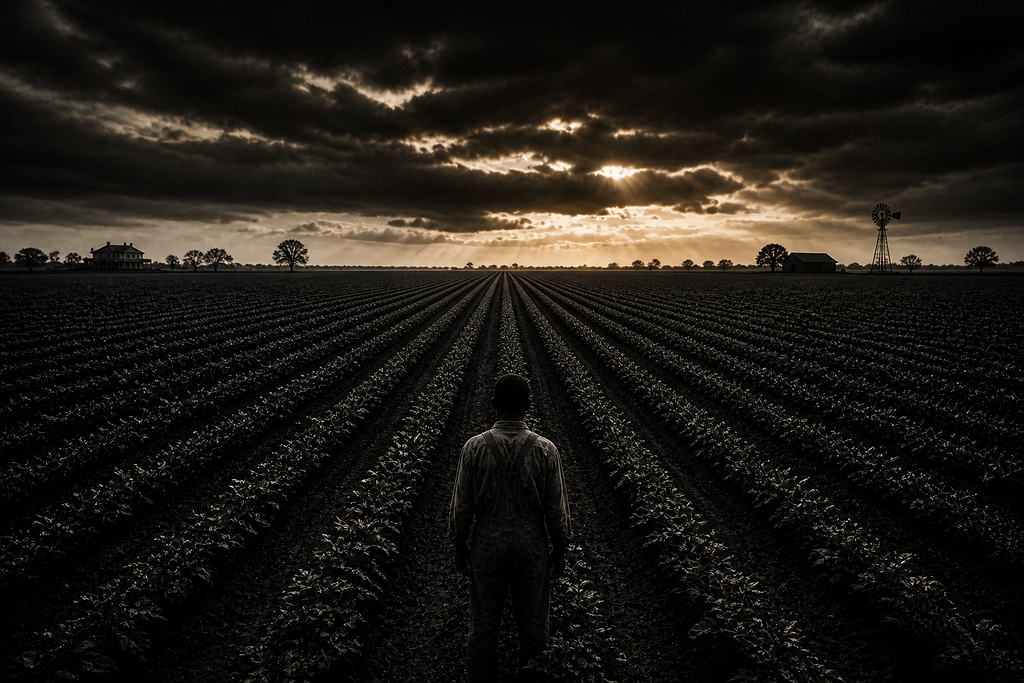
The System That Replaced the SystemSystems rarely collapse the way people want to believe they do, because they are not built to disappear when laws change or when a moment in history is declared over. What they tend to do instead is reorganize, reshaping themselves in ways that feel less visible, less confrontational, and more acceptable, while continuing to produce outcomes that look very familiar to anyone willing to pay attention.That is what makes this phase of the story so important, because control did not vanish after emancipation. It evolved into something more structured, more procedural, and in many ways more difficult to challenge, because it no longer presented itself as oppression. It presented itself as order.When newly freed Black families stepped into this new reality, they were not only navigating economic uncertainty, but they were also doing so while carrying the weight of systemic deprivation that had been intentionally enforced for generations. The inability to read or write was not accidental. It was the result of laws that made literacy illegal, and even after those laws were removed, the absence of formal education created an immediate barrier to understanding contracts, negotiating terms, or even fully recognizing the risks embedded in the agreements being presented to them. At the same time, there was a powerful and determined effort within these communities to build schools, to pursue literacy, and to close that gap, but desire does not erase disadvantage overnight, especially when the systems being entered are already structured in ways that reward those who understand them and exploit those who do not.Land remained the clearest path to stability, and many families moved toward it as quickly as they could, but that pursuit was shaped by another broken promise that rarely gets the attention it deserves. The widely discussed commitment of land redistribution, often remembered as forty acres and a mule, never materialized in a way that created broad-based security, leaving most freed individuals without a reliable place to live or a foundation to build from. Without that base, many were forced into refugee like conditions, temporary settlements, or back into labor arrangements with the very people they had just been freed from, not because they lacked ambition, but because they lacked options.It is within that context that systems like sharecropping took hold, presenting themselves as opportunity while functioning as controlled participation. On paper, these arrangements allowed families to work land in exchange for a portion of what they produced, offering a path into the agricultural economy without the immediate need for ownership. In practice, the structure of those agreements often kept individuals in a constant state of obligation, with landowners controlling access to tools, seed, housing, and credit, all of which were accounted for in ways that ensured debt remained a consistent outcome. Participation in the system did not create independence. It created a cycle where effort was constant, but progress remained just out of reach.Alongside that, exploitative labor contracts became another mechanism of control, with many freed individuals being pressured or coerced into agreements that restricted their movement and locked them into working conditions that looked different from slavery on the surface but maintained a similar position at the bottom of the economic structure. These contracts were written, enforced, and interpreted within a legal framework that assumed fairness without accounting for imbalance, which meant that the appearance of consent often masked the reality of constraint.Even for those who managed to acquire land, ownership carried a fragility that was not always visible at the outset. Property taxes, which are often understood as a routine part of ownership, became a quiet but effective tool for destabilization, particularly when applied to populations that had not been given the time or resources to build financial resilience. When those taxes could not be paid, land was taken, transferred, or sold, not through force, but through process, leaving behind a record of transactions that appeared legitimate while erasing what had been built.Legal structures reinforced this pattern, not always through explicit discrimination, but through neutrality that ignored reality. Laws governing contracts, debt, and property did not need to be openly biased to produce unequal outcomes, because when individuals enter agreements from vastly different positions of power, knowledge, and access, the results are rarely balanced, regardless of how fair the terms may appear.What begins to take shape, when you look at it this way, is not a series of isolated challenges, but a coordinated environment where every pathway to stability carried a built-in vulnerability. Effort alone was not enough to overcome structure, and participation in the system did not guarantee advancement. In many cases, it ensured that progress would be slowed, redirected, or reversed.By the time these patterns became undeniable, they were already embedded in the foundation of everyday life, shaping not only individual outcomes, but the trajectory of entire communities.None of this required visible force.The system did not need chains anymore. It needed structure.
The Price After Freedom: What Was Taken and What It Means Now (I)
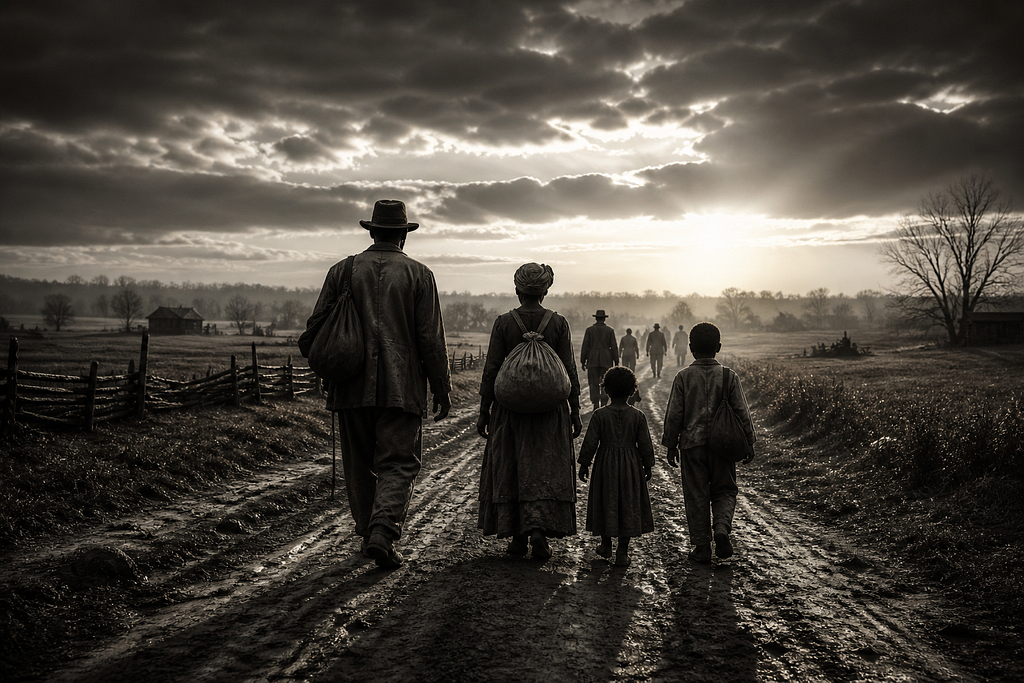
Freedom Was Given. Stability Was NotThere is a difference between being free and being secure, and history has a way of softening that distinction just enough for people to feel comfortable with the version they have been given.We have been taught to view the end of slavery as a finish line, a moment where everything shifted and a new reality began, as if the transition from bondage to freedom created an immediate pathway to stability. But history does not move that cleanly, and when you take the time to examine what actually followed, it becomes clear that freedom was granted without any real consideration for what it would take to sustain it.Newly freed Black families were not stepping into opportunity. They were stepping into uncertainty at a scale that is difficult to fully comprehend. There was no coordinated system in place to provide food, shelter, or medical care, and the consequences were immediate and devastating. Starvation was widespread, disease moved quickly through communities with no protection or treatment, and it is estimated that a significant portion of the newly freed population either died or suffered severe illness in the years immediately following emancipation. Smallpox and cholera were not distant threats. They were daily realities in environments where survival had already been compromised.At the same time, freedom created an emotional and logistical crisis that rarely gets the attention it deserves. Families that had been separated through the business of slavery began searching for one another across state lines, often with little more than fragments of memory to guide them. Mothers looking for children, husbands looking for wives, siblings trying to reconnect with siblings they had not seen in years. These searches could take years and, in many cases, ended without resolution. The idea of freedom, for many, began not with building something new but with trying to recover what had been taken.Layered on top of that was a level of organized resistance that made even basic progress dangerous. White supremacist groups, including the Ku Klux Klan, emerged with the clear intent of maintaining control through intimidation and violence. Freed Black individuals who attempted to vote, own land, or simply exist outside of the expectations of the old system were met with threats, beatings, and in many cases, death. This was not isolated behavior. It was systemic, and it operated with a level of impunity that reinforced the message that freedom had limits.So, when we talk about emancipation, it cannot be framed as a complete transition. It was a transfer of responsibility without a transfer of resources, a shift that exposed millions of people to conditions they had never been given the opportunity to prepare for. There was no infrastructure, no financial base, and no safety net capable of absorbing the inevitable challenges that come with starting over.That is why it is important to be precise in how we talk about this period. What occurred was not a fresh start. It was exposure, and exposure without protection carries consequences that extend far beyond the moment itself.And yet, even within that reality, many newly freed Black families did what people have always done when given even the smallest opening to build something of their own. They pursued land, not simply as property, but as a foundation for stability, control, and generational continuity. Land represented the ability to produce, to create distance from dependence, and to establish something that could be passed down. It was not just ownership. It was positioning.For a brief period, in certain regions, that positioning began to take shape, and you can see the early signs of what could have developed into something sustainable. But systems that have been operated for generations do not disappear because laws change. They adjust. They evolve. They find new ways to maintain the same outcomes without relying on the same language.That is the part of the story that often gets overlooked, because it requires a deeper level of reflection than most conversations are willing to engage. It is easier to celebrate freedom than it is to examine what followed. It is easier to point to progress than it is to question the conditions that shaped it.But if we are serious about understanding where we are today, then we have to be willing to sit with the gap between what was given and what was withheld, because that gap explains more than most people realize.Freedom removed ownership of people, but it did not remove control of outcomes, and once you see that clearly, the patterns that follow begin to make more sense, not from a place of anger or blame, but from a place of understanding that allows for a more honest conversation about both the past and the present.Because understanding, when it is grounded in truth, is where real conversations begin.
America at 250: The Truth About Who Got to Keep the Wealth

Week 5: Robert F. Smith — Wealth Reclaimed and RedirectedContinue reading on Medium »
America at 250: The Truth About Who Got to Keep the Wealth
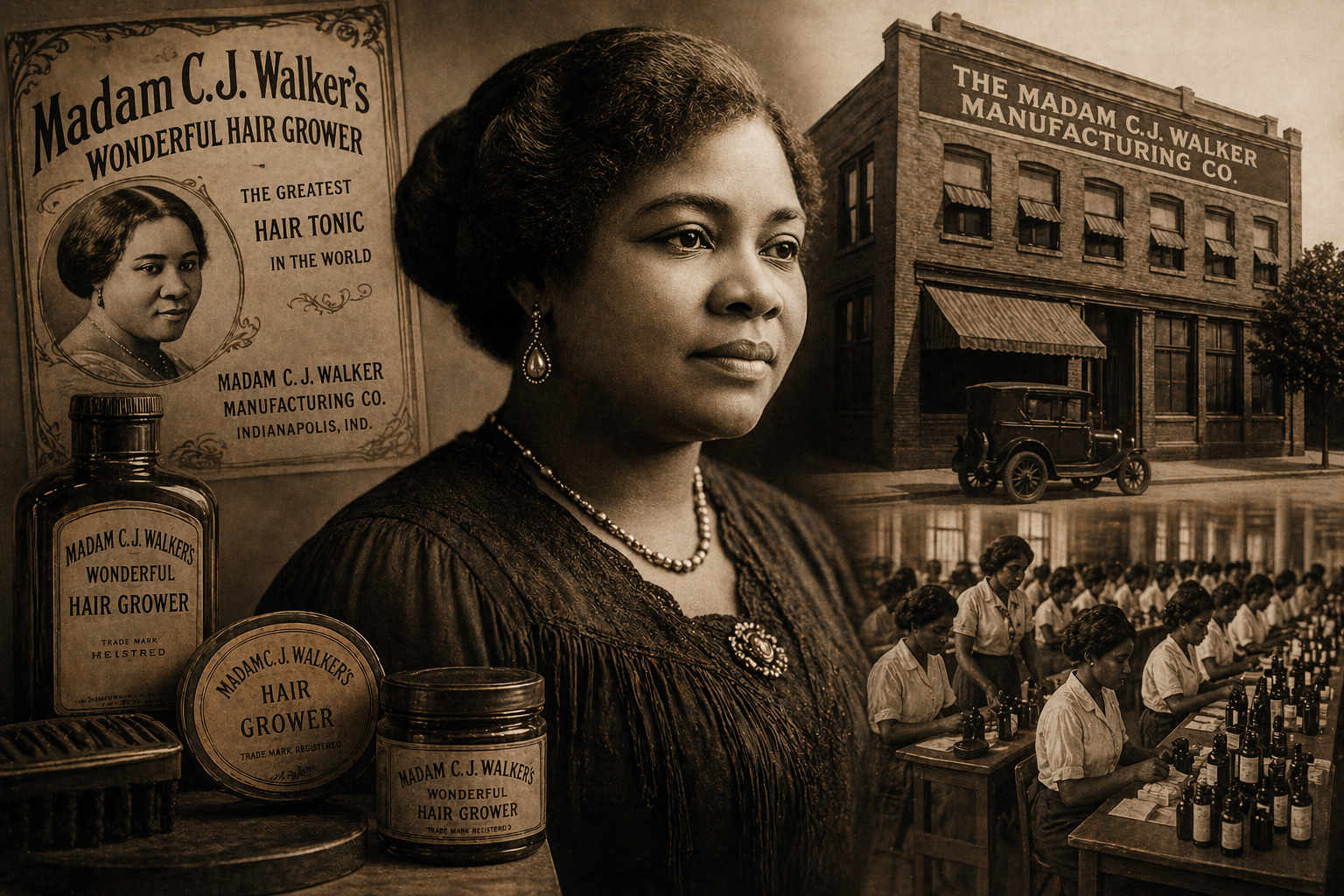
Week 4: Madam C. J. Walker — Wealth Built with IntentionContinue reading on Medium »
America at 250: The Truth About Who Got to Keep the Wealth
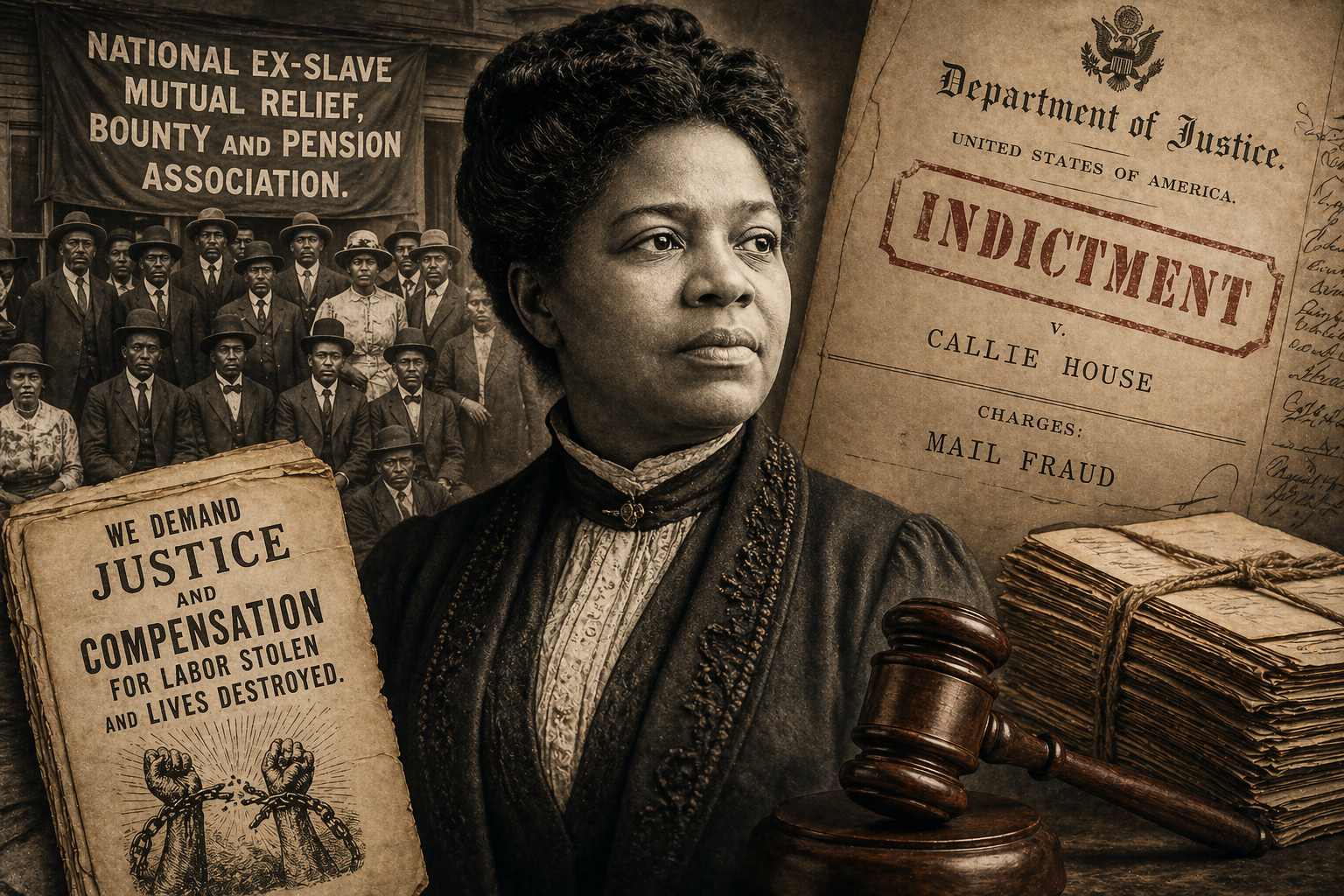
Week 3: Callie House — Wealth Organized, Then CriminalizedContinue reading on Medium »